
October 8, 2025
Topic Jews Topic Press-release Topic Israel
This project, which spanned five years, presents a chronological survey of Jewish life on the territory of modern Israel. The earliest reference to “the Land of Israel” appears in the Torah, a text dating back approximately three millennia.
One of the earliest maps documenting Israel as the land of the twelve tribes traces its origins to 1200 BC, illustrating the historical continuity of Jewish habitation and border changes [source: the Torah as well as archaeological evidence].
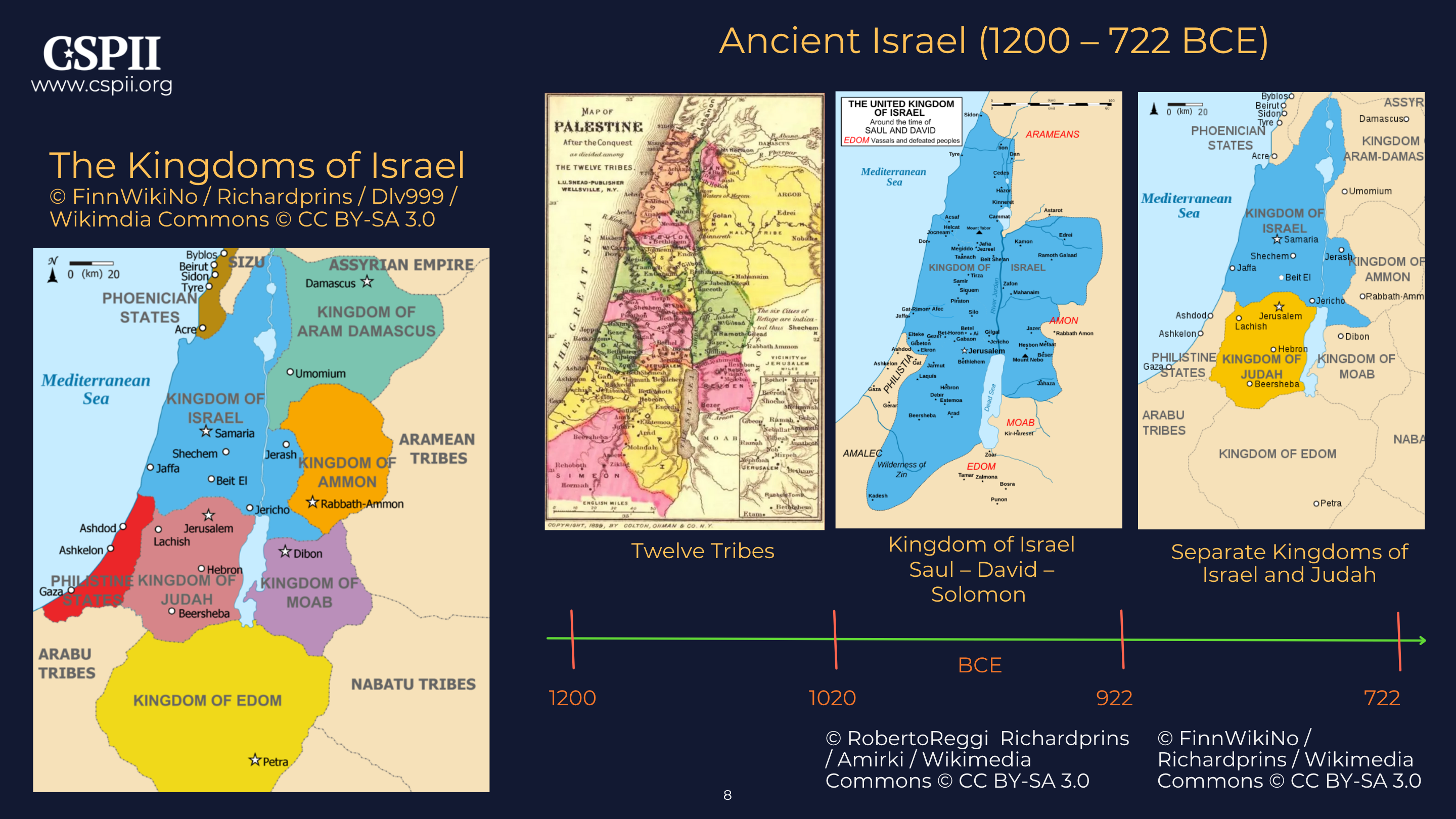
The first Jewish temple, constructed in the region in approximately 1450 BC as documented in the Torah as well as by the archaeological evidence, stands as proof that Jews lived there for 420 years—until the Babylonian exile, during which Jews were forcibly removed from their land for a period of 60 years. Upon their return, the community built the Second Temple and retained a strong presence for another 590 years. Across centuries, a significant compilation of historical records, artifacts, and art bearing distinctive Jewish religious symbols further attests to uninterrupted Jewish settlement.
According to the study, Jews have maintained a presence in the territory of modern Israel from 70 CE to the present day, with the sole exception of the period of Jordanian occupation from 1948 to 1967.
On the Term “Palestine” and Historical Nomenclature
The second part of the study addresses the terminology “Palestine,” tracing its origins and the factors that led to the region’s re-branding by various ruling empires. The name “Palestine” was derived from the Roman term “Philistia” (itself originating from the Hebrew “Plishtim”—meaning invaders), a term that Romans used for the region after the Jewish revolt and the ensuing dispersion. Archaeological and historical findings indicate no distinct Philistine or “Palestinian” identity, culture, or continuous presence following the Babylonian exile and the Jewish return.
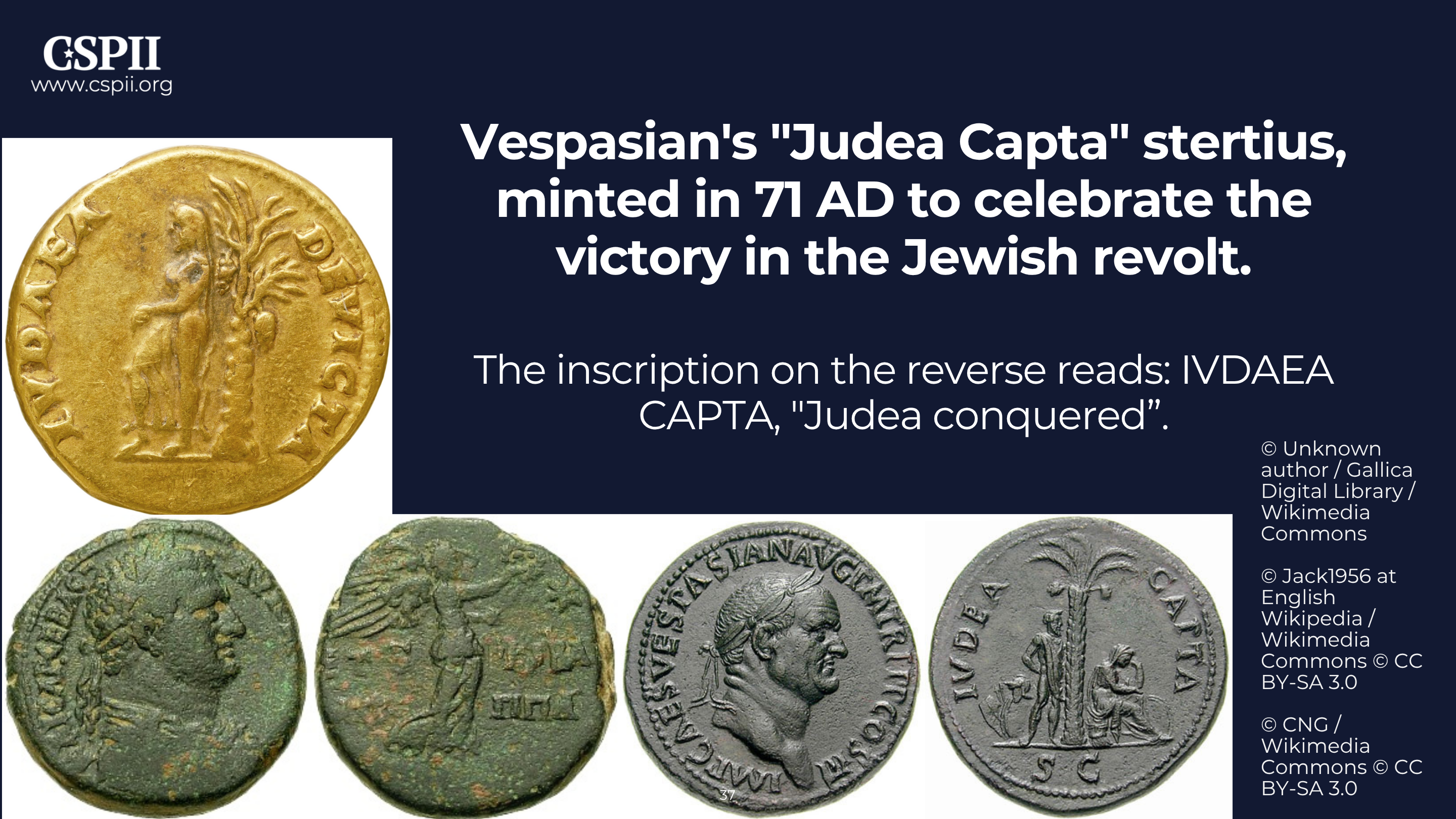
After the Roman conquest of Jerusalem in 63 CE, the area was designated as Judea Province, with coins minted to commemorate Roman victory over the Jews—emblazoned with “Judea Capta”—further underscoring the Jewish presence at that time. Following Jewish uprisings against Roman rule, the name was changed to Syria Palaestina in 136 CE, and Jerusalem was renamed Aelia Capitolina as part of Roman efforts to erase Jewish identity and culture.
With the rise of the Islamic Ottoman Empire, which governed the region from 1453 to 1922, the historical record shows no reference to the territory as "Palestine" in official designations. According to the study’s historical and archaeological evidence, “Palestina” was a geographic term used briefly in antiquity, unconnected to any specific ethnic, linguistic, or religious group with lasting roots in the land.
The study concludes there is overwhelming evidence for a continuous Jewish presence in the territory of modern Israel, and no evidence of a people known as “Palestinians” as defined by enduring territorial, linguistic, or cultural attributes.
End of Ottoman Occupation
After the fall of the Ottoman Empire following World War I, it was adjudged both logical and lawful for the area previously called “Palestine” to be acknowledged as the national home for the Jewish people. This status was affirmed by the Balfour Declaration of November 2, 1917, and was ratified in the League of Nations Mandate, which explicitly recognized the Jewish people’s historical connection to the region and their right to reestablish their national home.
At the San Remo Conference (April 18–25, 1920), leading Allied powers solidified these rights, resulting in several key legal outcomes:
- For the first time, Palestine became a legal entity.
- Previous regional agreements were nullified.
- Palestine was placed under the British Mandate, with the Balfour Declaration incorporated as international law.
- The Jewish people were recognized as the national beneficiary, with de jure sovereignty conferred.
- Legal title to Palestine was transferred to the Jewish people—a title that cannot be revoked by international authorities.
- Provisions for Arab residents in neighboring Syria and Mesopotamia were likewise established.
- San Remo marked the legal end of centuries-long foreign colonization in the region.
The Right of Sovereignty over the Land of Israel
According to the CSPII study, the State of Israel currently holds sovereignty over the entire territory traditionally recognized as Israel, including Jerusalem, Judea, Samaria, the Jordan Valley, and the Gaza Strip. This conclusion is based on an analysis of legal documents and principles of international law tied to key historical events.
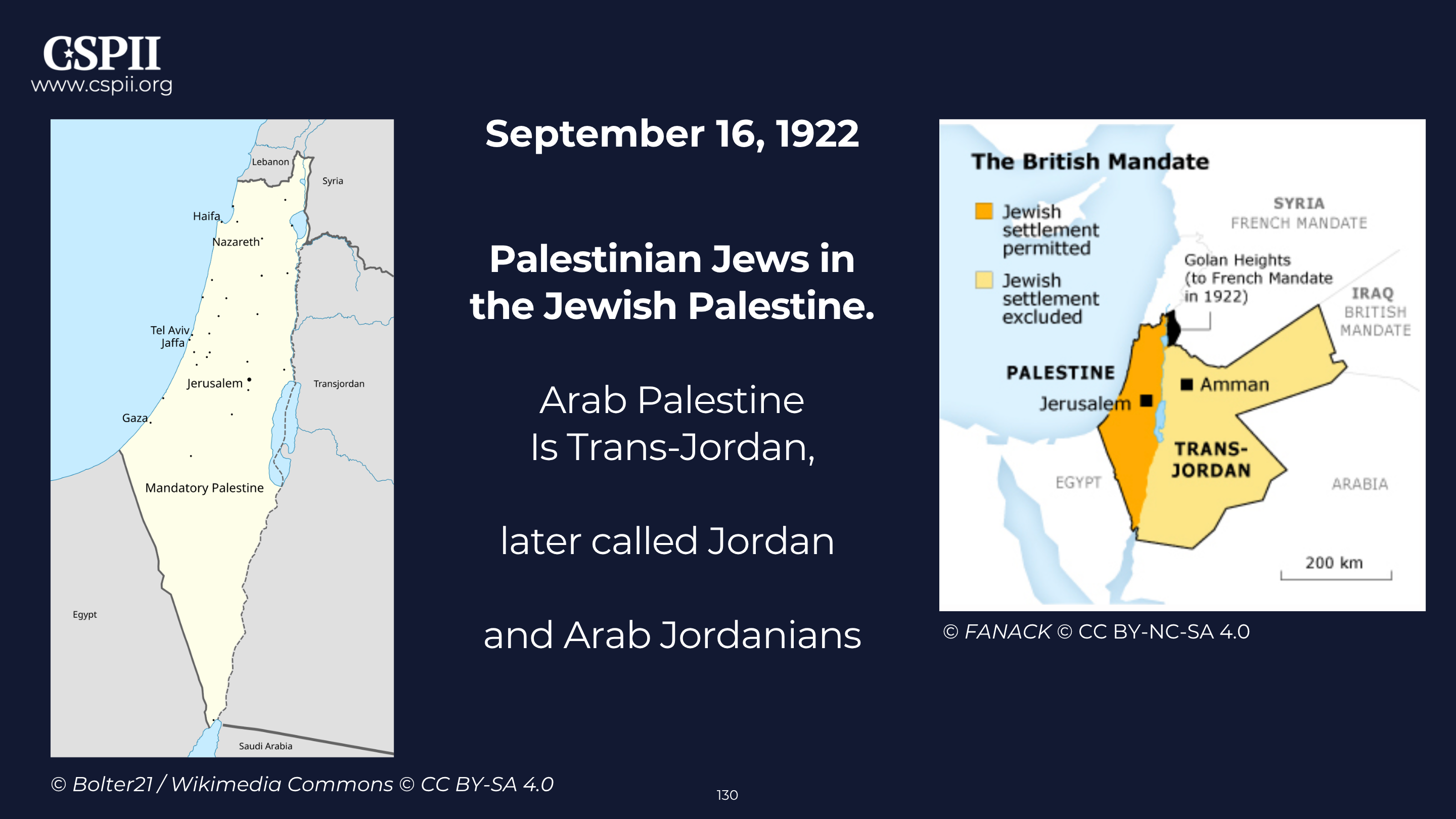
The transfer of sovereignty over the land of Israel occurred multiple times throughout history, notably during the following periods:
- From Ottoman Empire rule (1515–1917) to British administration (1917–1920), under the principle of iura occupationis (right of occupation). During this period, the territory was managed as the Occupied Enemy Territory Administration (OETA). This transfer was formalized by acceptance of Article 22 of the Covenant of the League of Nations and confirmed through French-British treaties such as the Treaties of Sèvres and Lausanne, by which the Ottoman Empire ceded sovereignty in favor of the Allied Great Powers.
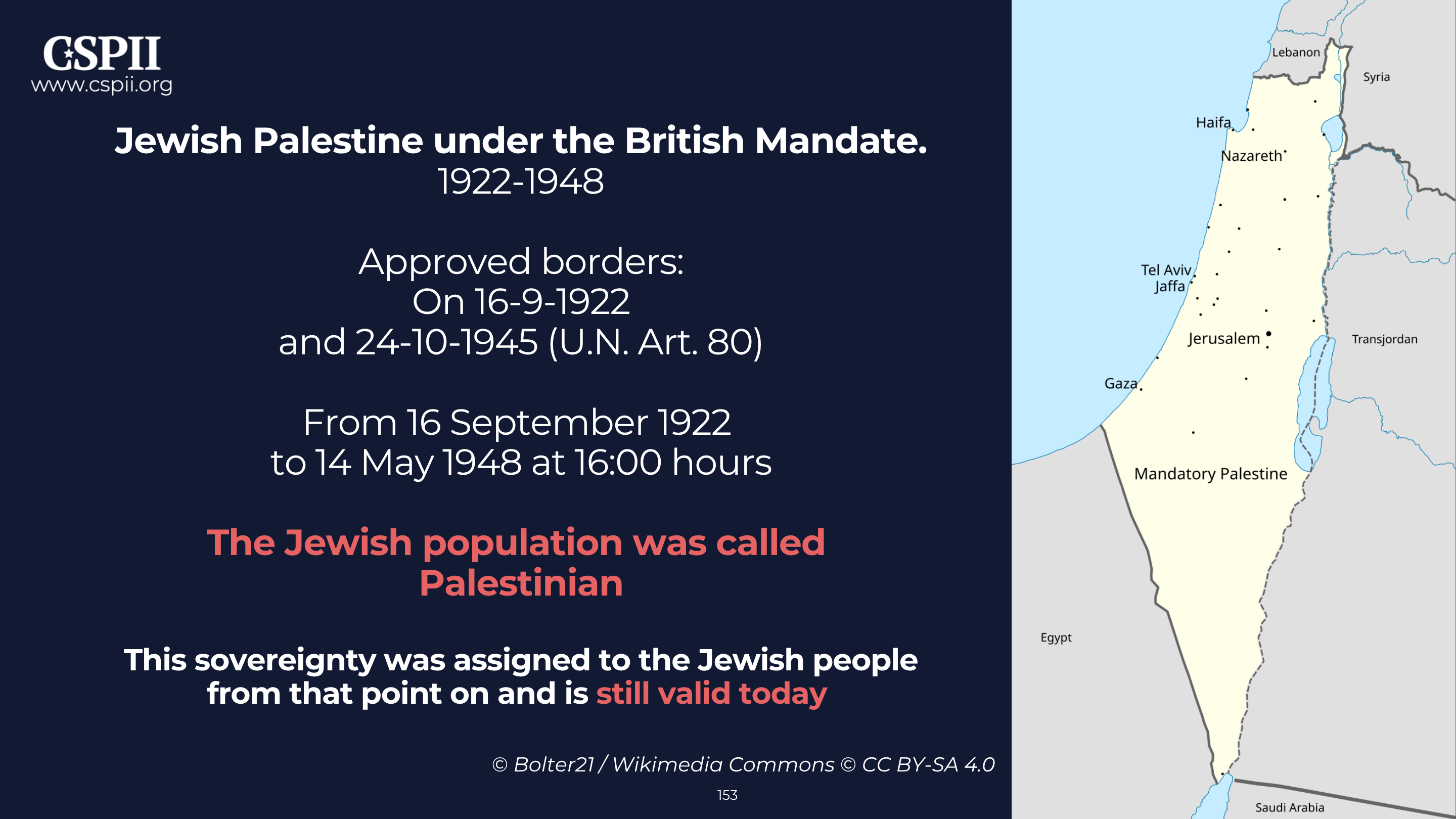
- The San Remo Conference (April 25, 1920), where sovereignty held by the Allied Great Powers was legally transferred to the Jewish people through the Mandate for Palestine. (The period between September 16, 1922, and May 14, 1948, corresponds to the Mandate’s formal authorization.)
- Between 1922 and 1948, Great Britain acted as the Mandatory Power, administering Palestine on behalf of the Jewish people under the League of Nations Mandate system. The provisions of Article 22 of the League of Nations Covenant were further reinforced by Article 80 of the United Nations Charter (1945), embodying the principle of uti possidetis juris (legal right of possession).
- On May 14, 1948, sovereignty was formally transferred from the Jewish people to the newly established State of Israel, which continues to exercise sovereignty today, also under the principle of uti possidetis juris.
The study also sheds light on what is often presented as evidence of the rights of the “Palestinian people”—namely, a map proposed in the United Nations General Assembly Resolution 181 on November 29, 1947. This map was offered as a potential solution to resolve conflicts and violent clashes between Jews and Islamic Arabs, the latter guided by Islamic political principles.
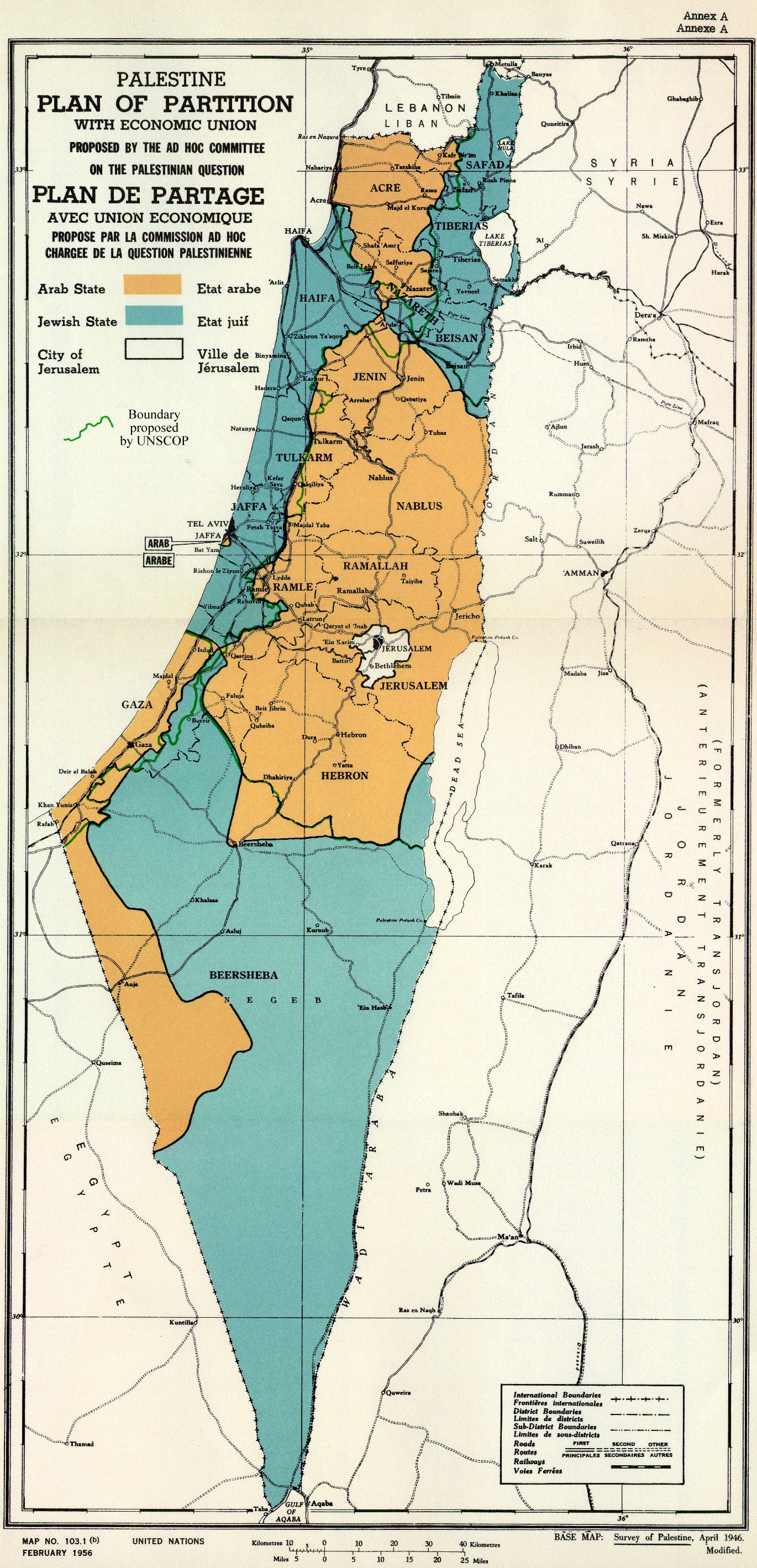
© United Nations / Wikimedia Commons
“Unable to manage escalating violence between Islamic Arabs and Jews, the British Mandate authorities relinquished control to the UN, which established the United Nations Special Committee on Palestine (UNSCOP) to facilitate a solution. However, the proposed partition map was rejected by the Arab League. Therefore, this map has no legal status and cannot be used as proof of legitimate claims by any group, as it was only a proposal that was never granted binding or legal recognition.” – Clarifies Marco Moshe Bumaguin, CSPII Specialist on Israel’s History, Senior Lecturer
“As this study demonstrates, there is strong and undeniable evidence supporting the Jewish people's right to the territory of Israel within borders defined over a century ago as well as their presence on the territory over thousands of years This comprehensive study is meant to educate the world on this complex and sensitive topic, clarifying the archaeological, historical, and legal facts. We have observed that even many Jews are unclear about how this territory was formed, how Israel appeared on the map, and what the term ‘Palestine’ truly means.
CSPII, which focuses on the study of Political Islam, highlights through this work a clear playbook illustrating how Political Islam systematically takes control of territories worldwide. This process of occupation and separation has been repeated multiple times across different regions, often without any legal foundation, driven by efforts to subjugate non-Islamic society and seize their lands. These actions are guided by the fundamental principles and directives found in the Koran, the Sira (Mohammed’s life story), and the Hadith (Mohammed’s traditions)." explains Milan Podlipný, Co-Founder and CEO of CSPII.
For further information and to view the complete study (including detailed visuals), please watch the full presentation linked below:
About CSPII
The CSPII (Center for the Study of Political Islam International) is an independent non-profit research and educational organization. Our concern is with the ideological doctrine of Islam that relates to Kafirs (non-Muslims), and, therefore, is political. We define this part of the doctrine as “Political Islam”.
We analyze Islamic primary doctrine, and its continuous, harmful political impact on individuals and governments. We use scientific methods, rational thought and fact-based reasoning to show how the influence of Political Islam exponentially spreads within non-Islamic countries, creating the economic, legal and sociocultural foundation to turn them into Islamic ones.
Contact
Press Release in PDF: