
September 24, 2026
Topic Israel Topic Research Topic Jews
This paper examines why Israel receives a degree of hostile attention from Islamic movements, organizations, governments, media outlets, and activists that is vastly disproportionate to its territory, population, or share of global conflict. The phenomenon cannot be explained by one war, one government, one territorial dispute, or even by Palestinian nationalism alone. It arises from several mutually reinforcing factors: the doctrinal status of land formerly ruled by Islamic powers, Islamic teachings concerning Jews and non-Muslims, obligations of solidarity within the Umma, the political usefulness of a common enemy, and the strategic value of the Palestinian cause for mobilization inside both Islamic and non-Islamic societies.
The purpose is therefore not merely to explain Hamas or the Gaza war. It is to explain why Israel repeatedly becomes the central focus through which diverse Islamic actors express solidarity, recruit supporters, spread political narratives, build alliances, and advance broader objectives.
Disproportionate Focus
The "Palestine" cause is a case where Islamic organizations are amassing forces on a single front. Consider the disparity between its demographic significance and the attention it receives. Gaza's Islamic population of approximately two million constitutes roughly 0.1% of the global Islamic population of two billion. Yet despite the fact that, in recent years, conflicts in countries such as Syria, Yemen, Afghanistan, Sudan, and Iraq have claimed far more Muslim lives (at the hands of other Muslims), a review of Islamic organizations' websites and social media channels shows that the “Palestine” cause frequently accounts for between 30% and 90% of the content they promote.
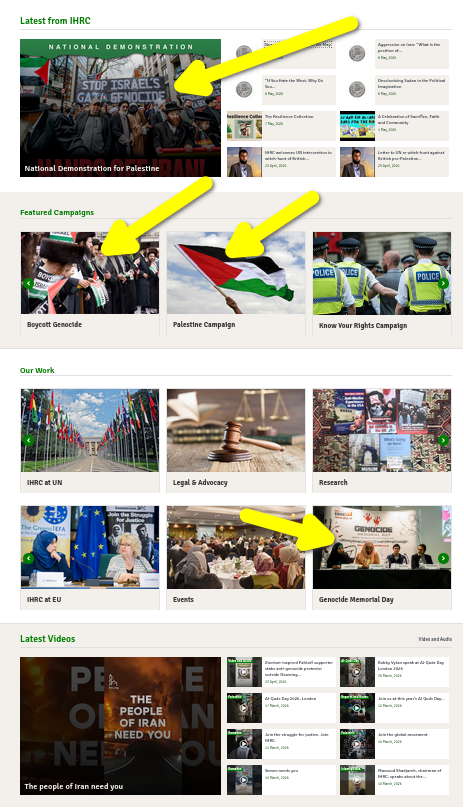
[source: IHRC, screenshot from their webpage on May 30, 2026]
From Territorial Grievance to Rejection of Jewish Sovereignty
The war against Israel is often presented as if it were only about Gaza, or only about Judea and Samaria, or only about “occupation,” or only about borders. But the pattern is much wider and older: Israel is treated by Islamic movements not merely as a political opponent, but as a symbolic obstruction to Islamic power. The issue slides from humanitarian concern, to territorial grievance, to anti-Zionism, to denial of Israel’s right to exist, and finally to the wider Islamic claim that Islamic land cannot legitimately remain under non-Islamic sovereignty.
This sliding scale is intentional. The public argument begins with “we are not against Jews, only Zionists.” Then it becomes “we are only against what Israel is doing in Gaza.” Then “Israel has no right to Judea and Samaria.” Then “Israel has no right to exist as a Jewish state.” Then, in the fully Islamic formulation: all Palestine is Islamic land, and therefore no part of it may be surrendered. Hamas’s 1988 covenant says openly that the movement’s “programme is Islam,” that Hamas is one wing of the Muslim Brotherhood in Palestine, and that it seeks to raise “the banner of Allah over every inch of Palestine.” It also defines Palestine as Islamic land and makes resistance to the “enemy” a sacred duty.
The newer, more polished language does not erase the older doctrine. Hamas’s 2017 document tries to sound more acceptable to Western ears by saying the conflict is not with Jews as Jews, but with the “Zionist project.” Yet the same document still defines Palestine from the Jordan River to the Mediterranean Sea, describes it as Islamic land, and rejects recognition of Israel, which they call “the Zionist entity”. This is the same sliding scale in diplomatic dress: first distinguish Jews from Zionists, then deny Zionism any legitimacy, then deny Israel any legitimate existence.
The Doctrinal Status of Israel, Jerusalem, and Jews
The doctrine is also very explicit about Islamic conquest of Jerusalem. In a Hadith (Bukhari 3176) it is mentioned that the conquest of Jerusalem is one of six signs of “the hour” (also “the last day” and “day of judgement”), a central concept in the Islamic doctrine. It is also explicit about fighting Jews in the well known Hadith of the stones and trees: "You (i.e. Muslims) will fight with the Jews until some of them will hide behind stones. The stones will (betray them) saying, 'O `Abdullah (i.e. slave of Allah)! There is a Jew hiding behind me; so kill him.'” (Hadith Bukhari 2925)
It’s also worth considering that as 9% of Islamic doctrinal text is anti-Jew and Mohammed himself made jihad against Jews, the doctrine itself encourages special focus on them. Once those principles are accepted against Israel, the same logic does not stop at Israel. There are Jews beyond Israel.
Doctrines of Collective Islamic Solidarity
This level of consistency cannot be understood without considering the influence of Islamic doctrine. Beyond the fact that the doctrine includes a large amount of text on non-Muslims (51% of Islamic primary doctrine) and jihad (31%), several concepts are particularly relevant to understanding collective Islamic mobilization against Israel:
1. Loyalty and Separation
- Al-Wala' wal-Bara'—Promotes the loyalty to the Islamic community above all others. (Koran 3:28, 4:144, 5:51, 8:72–73, 60:1, 60:8-9)
2. Unity and Brotherhood
- Iʿtiṣām—Doctrinal concept that Muslims should collectively hold to “the rope of Allah” and not be divided (Koran 3:103, 8:46)
- Ukhuwwat al-īmān—Dictates not to abandon or surrender a fellow believer (Koran 49:10, Hadith Bukhari 2442)
- Singularity of the Umma—A general concept (Koran 21:92, Hadith Muslim 1851a)
- Wilāyat al-muʾminīn—A Shia concept of mutual guardianship and support among believers, which relies on the same Koran verses as Sunni principles (Koran 9:71, 8:72)
3. Prohibition Against Abandoning or Assisting Against Believers
- Taḥrīm al-khidhlān—Prohibits betrayal of fellow believers (Hadith Bukhari 2442, 2444)
- Iʿānat al-kuffār ʿalā al-Muslimīn—Prohibition to assist unbelievers against believers (Koran 60:1, Hadith Muslim 2494a)
4. Individual and Collective Obligations
- Fard ʿAyn—A compulsory individual duty to participate in jihad (Koran 8:72)
- Fard Kifayah—A compulsory collective duty to participate in jihad – if no one performs the duty, the entire community is considered sinful (Koran 9:122, Hadith Bukhari 2787)
5. Concealment or Protection of Fellow Believers
- Satr al-ʿUyūb—Encourages believers to conceal the faults of fellow believers (Koran 24:19, 49:12, Hadith Muslim 2580, 2589, 2699, Hadith Bukhari 2442)
These doctrinal concepts strongly encourage Islamic unity in public discourse, particularly during conflicts between Islamic and non-Islamic parties. This influence is especially visible in the case of Israel.
There is a striking degree of uniformity among many Islamic organizations and media outlets in their treatment of Israel. This includes repeated allegations of genocide, the omission of key contextual events—such as the October 7 massacre, the thousands of rockets launched from Gaza during the early months of the war, and the taking of hostages—and what appears to be broad support within many Islamic communities for these narratives.
One important explanation is that these organizations draw from a common doctrinal corpus: the Koran and the Sunna. Their political methods, affiliations, and levels of Islamic observance may differ, but the underlying texts concerning the Umma, Jews, non-Muslims, loyalty, and jihad remain shared reference points.
The widespread chant “Khaybar Khaybar ya yahud. Jaish Muhammad soufa yaʿoud! (Khaybar, Khaybar, o Jews! The army of Mohammed will return!)” illustrates this connection. Its use in demonstrations against Israel shows that at least part of contemporary mobilization consciously invokes early Islamic warfare against Jews.
Political Solidarity Beyond Ritual Observance
One interesting characteristic appears to cut across the entire spectrum of individuals with Islamic backgrounds who are openly hostile towards Jews and Israel. Regardless of whether individuals keep their Islamic observances (five daily prayers, wearing of Islamic veiling, fasting during Ramadan, etc.), it seems to not have any influence on the level of intensity of joint support of anti-Jewish and anti-Israeli sentiments and actions within the wider Umma. The doctrinal expectation of Islamic solidarity appears to retain a powerful influence. If this observation is correct, solidarity with the Umma is not merely one Islamic obligation among many; it is one of the most consistently manifested expressions of Political Islam. A contemporary illustration is the current NYC Mayor, Zohran Mamdani, who publicly declared that he is not observing five daily prayers and whose wife does not wear a veil. This hasn’t been stopping him from acting against the state and political representation of Israel as well as promoting anti-Jewish narratives.
The Strategic Functions of the Israel Cause
The obsession with Israel is useful to Islamic organizations and regimes because it consolidates power. It provides a sacred cause that can unite jihadis, nationalists, left- and right-wing activists, and other anti-Western movements. It allows regimes like Iran, movements like Hamas and Hezbollah, and Muslim Brotherhood-linked networks in the West to redirect anger away from their own failures and toward a single symbolic enemy. Israel becomes the rallying point through which jihadis mobilize identity, recruit supporters, intimidate critics, and gain influence in non-Islamic institutions.
The focus on Israel serves broader strategic objectives in the non-Islamic world. Centering public attention on the Israeli–Palestinian conflict shifts attention away from debates over Political Islam-related subjects like continuous, uncontrolled Islamic political migration, failed integration, high rates of doctrinally motivated crime, and Islamic legal or political initiatives, while simultaneously normalizing Islamic political activism and protest movements. Meanwhile, accepting the propaganda of Islamic anti-Jewish narratives created by fabricated facts and news in non-Islamic countries weakens their ideological defense mechanisms and unknowingly promotes the objective of Political Islam—global Islamic domination.
Political Islam’s Infrastructure and Infiltration in the West
This point has been made not only by Israelis or Jews. Ayaan Hirsi Ali, a Somali-born former Muslim and now a Hoover Institution fellow specializing in Political Islam, warns that the West must confront not only Hamas as an organization, but “Hamas the idea.” She argues that Hamas is part of a broader Islamic political infrastructure rooted in the Muslim Brotherhood, and that Western governments are mistaken when they treat the problem as merely military or foreign-policy related. In her words, Hamas has become “a domestic issue” in Western democracies because Islamic networks have built political, media, educational, philanthropic, and activist infrastructures inside the West.
Why the Conflict Matters Beyond Israel
Former French Prime Minister Manuel Valls, also not Israeli or Jewish, framed Israel’s fight as part of a civilizational struggle. In Israel on the Front Lines, he argued that Israel fights in Gaza “not only to defend itself,” but to protect the values and security of a civilization under attack. He connects the war against Hamas with the Islamic violence France itself has suffered — Toulouse, Nice, Paris, the Bataclan, and the murder of Samuel Paty — meaning that Israel is not an isolated exception, but one front in a broader Islamic war against non-Islamic societies.
Former Spanish Prime Minister José María Aznar was even more direct. In his article If Israel Goes Down, We All Go Down, he wrote that anger over Gaza is often a distraction and that Israel is “the West’s best ally” in the region. He identified Israel as “our first line of defence” in the fight against jihad. His argument is simple: if the West allows Israel to be delegitimized, isolated, and broken, it is not buying peace; it is weakening the first barrier against the same forces that threaten the West itself.
Colonel Richard Kemp, former British Army commander, has made the same point from a military and moral angle. In his BESA address, he argued that “to fight for Israel” internationally is also to fight for democracy, freedom of speech, and civilized values. He also explains how Hamas and similar movements exploit Western media morality: use human shields, provoke Israeli defensive action, manufacture images of suffering, and then weaponize those images to delegitimize Israel.
In a later interview, Kemp stated the hidden issue more bluntly: this is “not a war over land,” but rather a “religious war by Muslims against Jews”. Whether one accepts that formulation fully or not, it captures something Western discourse usually avoids: the conflict cannot be understood only through maps, settlements, checkpoints, negotiations, or humanitarian images. Islamic doctrine and jihad are not side issues; they are central to the persistence of the war.
Doctrinally prescribed and continuously executed Islamic Jew-hatred is not only the problem of Jews living in Israel and in diaspora communities. It is a problem of non-Islamic society as a whole. Jews can conceal their identity, avoid wearing clothing or symbols that reveal their Jewishness, and, if necessary, leave highly Islamized and openly anti-Jewish countries for Israel. But the countries they leave behind remain in the hands of a Jew-hating ideology that drove them away. That ideology, Political Islam, which openly declares hatred of all non-Muslims and declares unending jihad against them, remains a problem for those societies even after their Jewish victims have left.
Strategic Recommendations
Non-Islamic governments should be standing by Israel as allies. This decision does not have to be based on personal sympathies, but on strategic calculation. Israel absorbs most of the doctrine-based hate from Islamic world on itself. This gives other non-Islamic countries enough time and space to implement preventive measures against the spread of Islamic political power.
Not only is standing by the ally of the non-Islamic world, Israel, the strategic thing to do, but the relentless stream of false allegations against Israel may provide the very opportunity the non-Islamic world needs to expose and discredit the Islamic political movement. Every case of deception regarding Israel that is exposed should be used to expose the wider movement spreading it. In this way, the jihad of deception against Israel can become a tool for weakening Political Islam in the West.
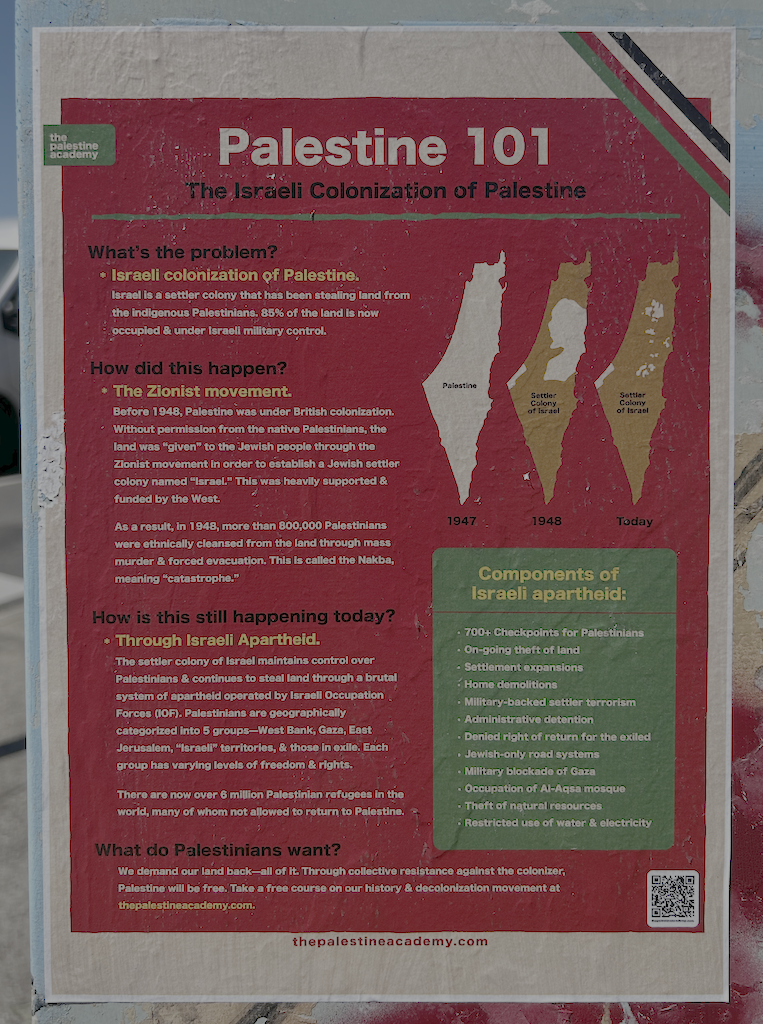
[above is an example of a typical jihad of deception, photographed in Australia]
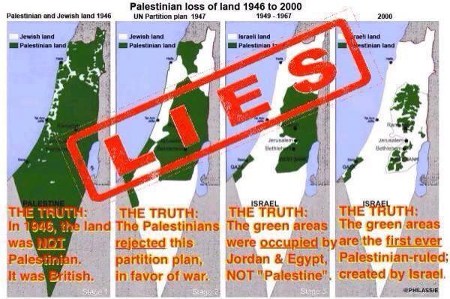
[above is a famous meme attempting to dismantle the jihad of deception]
That is why the non-Islamic world should not view Israel as a local inconvenience, but as a strategic ally. The issue is not whether every Israeli policy is perfect. The issue is whether the world will recognize the larger pattern: Israel is targeted not because of one border dispute, but because it represents a non-Islamic sovereign state in the land that Islamic doctrine and Islamic movements claim for Islamic rule and dominance. There is a lot of land with Islamic claims to it. And then, more broadly, 31% of Islamic doctrine is about jihad towards all non-Muslims (Kafirs), not just Jews. Jihad remains an enduring collective obligation until Islamic political supremacy is established.
Suggested Sources and Further Study
To learn more, start with the Hamas 1988 covenant and 2017 political document, then watch Marco Moshe Bumagin’s lecture on the Legal Foundations of Israel, read Ayaan Hirsi Ali on “Hamas the idea,” Manuel Valls on Israel as a front line, José María Aznar on why Israel’s fall would endanger the West, and Richard Kemp on Hamas’s military-media strategy. For the broader ideological background, study the Muslim Brotherhood, Hizb ut-Tahrir, Iranian revolutionary Islam, and the way Islamic organizations in non-Islamic countries use the Palestinian cause to gain political legitimacy, institutional access, and street power.